01 OpenAI's Three-Release Week
discuss ↗
OpenAI shipped three things in five days. ChatGPT Images 2.0 on April 21. GPT-5.5 on April 23. Then on April 26, The Decoder reported OpenAI was killing the Codex coding model and folding it into GPT-5.5. The launches were big on their own. The pattern is bigger: OpenAI is collapsing its product surface into one model that talks to agents, not apps.
Read more
On April 21, OpenAI released ChatGPT Images 2.0. The blog post promises better text rendering, multilingual support, and "advanced visual reasoning." Independent testing by Wes Roth and others put the new model 200+ ELO points ahead of Nano Banana 2 on arena.ai (1512 vs 1271 in Wes Roth's review, 53K views).
On April 23, OpenAI released GPT-5.5, described as "a new class of intelligence for real work and powering agents, built to understand complex goals, use tools." Sam Altman's launch tweet was deliberately understated: "GPT-5.5 is here! We hope it's useful to you. I personally like it." (19,782 likes). The official @OpenAI launch tweet collected 51,626 likes and 12.1M views. OpenAI also published the system card and a bio bug bounty the same day. NVIDIA posted that GPT-5.5 powers Codex on NVIDIA infrastructure.
Three days later, on April 26, The Decoder reported OpenAI was retiring Codex as a separate product and folding it into GPT-5.5. The Codex name dies. The function moves inside the bigger model.
The pricing and capability change matters. @swyx tweeted on April 23 (170 likes): "looks like new Pareto frontiers across everything: - Context: 400K context in Codex and a 1M in API - API Pricing: $5/m input and $30/m output tokens. […]" A 1M-token context window at $5/M input and $30/M output is a step-change in what an agentic app can afford to read and write.
@simonw noticed something else (352 likes, 55K views): "GPT-5.5 may not be in the official OpenAI API… but it's available via the apparently approved-of Codex API backdoor. So I used that." Translation: OpenAI shipped the model into Codex first, then the API. The agent product was the front door.
Adoption signal arrived fast. @AravSrinivas (CEO, Perplexity) on April 24 (497 likes): "We're rolling out GPT 5.5 as the default orchestrator model for Perplexity Computer." Perplexity swapped Claude Opus 4.7 for GPT-5.5 in the orchestrator role within 24 hours of release.
What it means.
OpenAI is reorganizing how it ships AI. The traditional pattern — train a model, expose it through an API, let third parties build apps — is being replaced by a pattern where the model and the agent interface are one product. Codex was the agent. Now Codex is GPT-5.5. Willison's "Codex API backdoor" line and swyx's "new Pareto frontiers" line are reading the same shift from two angles. For builders, this is a distribution change as much as a capability change: if the next OpenAI model arrives in Codex first and the API a week later, your integration plan has to account for that order.
Links and reactions
Coverage
OpenAI — Introducing GPT-5.5 (Apr 23)
OpenAI — GPT-5.5 System Card (Apr 23)
OpenAI — Bio bug bounty (Apr 23)
OpenAI — Introducing ChatGPT Images 2.0 (Apr 21)
NVIDIA — OpenAI's GPT-5.5 powers Codex on NVIDIA (Apr 23)
The Decoder — Codex folded into GPT-5.5 (Apr 26)
SemiAnalysis — The Coding Assistant Breakdown (Apr 24, 65K views)
Reactions
@OpenAI Launch tweet · Apr 23 · 51,626 likes · 12.1M views
@sama CEO, OpenAI — "GPT-5.5 is here! We hope it's useful to you. I personally like it." · 19,782 likes
@swyx AI engineer — "new Pareto frontiers across everything: 400K context in Codex, 1M in API, $5/m input, $30/m output"
@simonw Technologist — "GPT-5.5 may not be in the official OpenAI API… but it's available via the apparently approved-of Codex API backdoor." · 352 likes · 55K views
@AravSrinivas CEO, Perplexity — "We're rolling out GPT 5.5 as the default orchestrator model for Perplexity Computer." · Apr 24 · 497 likes
02 Anthropic A/B Tests, Gets Caught, Walks Back
discuss ↗

On April 21, Anthropic quietly removed Claude Code from its Pro tier landing page. By the early hours of April 22, after public backlash, Anthropic had reverted the change. The whole arc fits in two tweets from Anthropic's Head of Growth — about four hours apart, totaling 7.3M views. The week also included Opus 4.7's new tokenizer, which Anthropic confirmed maps the same input to roughly 1.0–1.3× more tokens. A price increase without a price-tag change.
Read more
On April 21 at 22:55 UTC, Anthropic's Head of Growth Amol Avasare posted (5,260 likes, 6.8M views, 1,365 replies): "For clarity, we're running a small test on ~2% of new prosumer signups. Existing Pro and Max subscribers aren't affected." The tweet was a response to users noticing that Claude Code had been removed from the Pro tier's landing page and documentation.
Simon Willison had already asked (1,555 likes, 343K views): "This is so confusing. Did Anthropic really just drop Claude Code from their $20/month plan? Why would they do that through a pricing page update without making a proper announcement?"
Roughly four hours later, on April 22 at 02:51 UTC, Avasare posted again (544 likes, 472K views): "Getting lots of questions on why the landing page / docs were updated if only 2% of new signups were affected. This was understandably confusing for the 98% of folks not part of the experiment, and we've reverted both the landing page and docs changes."
Two tweets, about four hours apart. The full corporate arc — frame, backlash, reversal — captured in fewer than 100 words.
The same week, Anthropic shipped Opus 4.7 with two compounding changes that increase token consumption. Per Boris Cherny (Head of Claude Code at Anthropic), as relayed in Matthew Berman's April 23 video (90K views), Opus 4.7's new tokenizer maps the same input to roughly 1.0–1.3× more tokens depending on content type, and the model thinks more on later turns in agentic settings — particularly at higher effort levels.
For developers, this combined to a meaningful change in cost-per-task. Willison flagged it on April 21 (216 likes, 43K views): "Claude Opus 4.7 with adaptive thinking via the API… am I missing something or is it not possible any more to force it to think?"
What it means.
Anthropic ran an A/B test on its core product's pricing without announcing it, got caught, and reversed in 28 hours. That's faster than most enterprise rollbacks, and the public response — Avasare's walk-back tweet uses the phrase "understandably confusing" — reads as genuine. But the broader pattern matters: between the Pro tier test, the Opus 4.7 tokenizer change, the adaptive-thinking shift, and the Claude Code post-mortem, Anthropic is rewriting the implicit contract — what you pay for, what the model does with your tokens, how the harness behaves — in public, in real time, with corrections issued only after users notice. For power users, the predictability of the platform is now the platform's main credibility variable.
Links and reactions
Coverage
Matthew Berman — "What's going on at Anthropic..." — quotes Boris's tokenizer statements verbatim (Apr 23, 90K views)
Nate B Jones — "Your Prompts Didn't Change. Opus 4.7 Did." (Apr 22, 65K views)
The Decoder — Claude users skew far wealthier than rivals (Apr 26)
Reactions
@TheAmolAvasare Head of Growth, Anthropic — "For clarity, we're running a small test on ~2% of new prosumer signups." · Apr 21 · 5,260 likes · 6.8M views · 1,365 replies (highest single-tweet engagement of W17)
@TheAmolAvasare Walk-back — "This was understandably confusing… we've reverted both the landing page and docs changes." · Apr 22 · 544 likes · 472K views
@simonw Technologist — "Did Anthropic really just drop Claude Code from their $20/month plan?" · Apr 21 · 1,555 likes · 343K views
@simonw On adaptive thinking — "is it not possible any more to force it to think?" · Apr 21 · 216 likes · 43K views
@bcherny Head of Claude Code, Anthropic — "We've been looking into recent reports around Claude Code quality issues, and just published a post-mortem on what we found." · Apr 23 · 3,371 likes · 593K views
03 Google Cloud Next: TPU 8t/8i Split, 16B Tokens/Min
discuss ↗
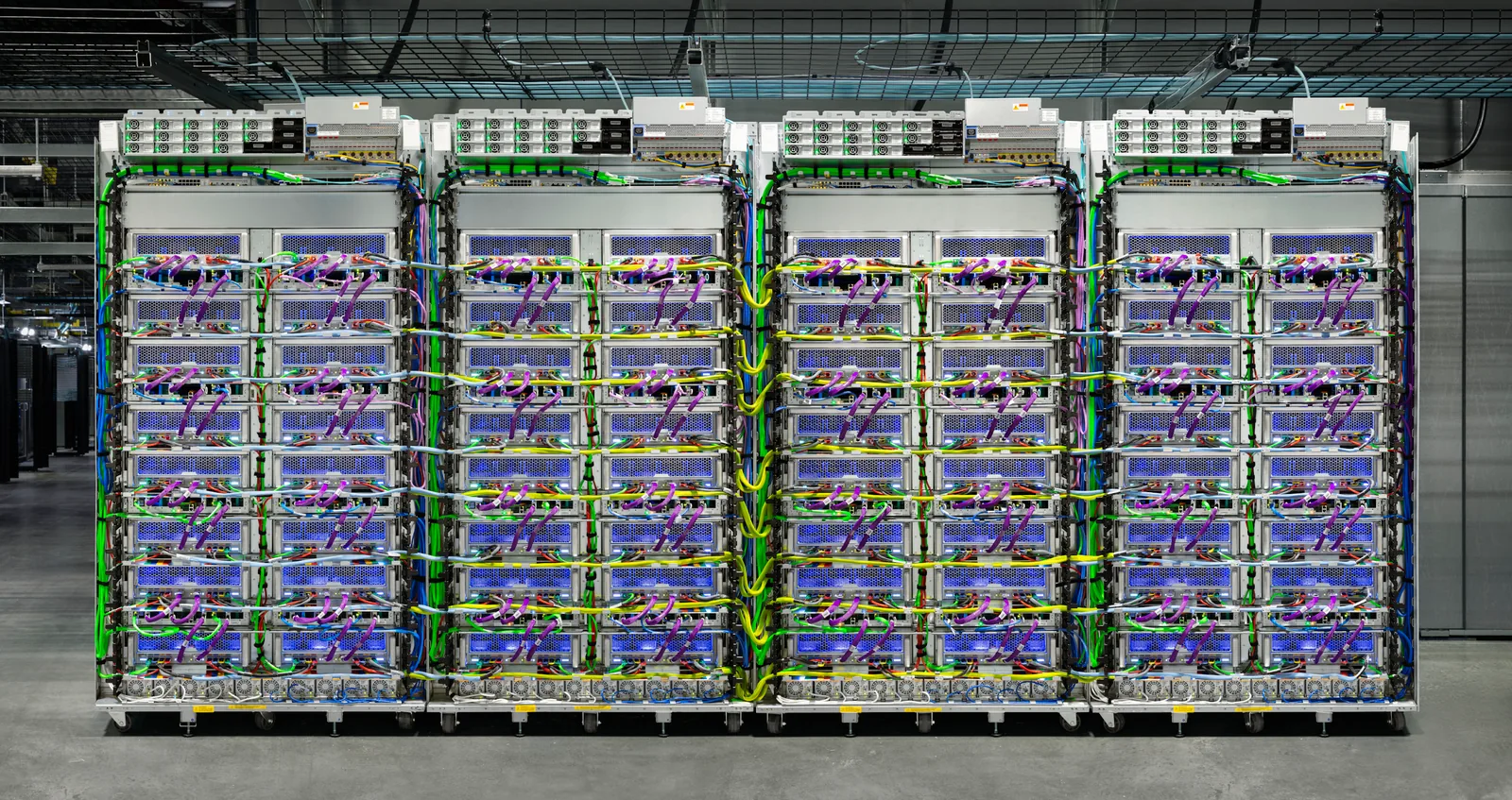
Google Cloud Next ran April 22-24 in Las Vegas. The headline announcements were two: TPU's 8th generation split into separate training and inference chips, and Gemini Enterprise jumping from 10 billion to 16 billion tokens per minute since January. CEO Thomas Kurian sat for an on-record interview where he said "we have more demand than we can possibly meet from all the other AI labs." This is the only frontier-lab story of the week without a comms problem attached.
Read more
On April 22, Sundar Pichai posted (15,221 likes, 1.27M views): "TPU 8t, optimized for training and TPU 8i, optimized for inference. Looking good!" The 8th-generation TPU is split into two SKUs. Per SemiAnalysis's correction of an official block diagram: "The HBM3E is 12-hi not 8-hi as per the diagram. At 6 stacks of HBM capacity for TPU 8t, it must be 12-hi to achieve the 216GB of HBM capacity quoted."
Same day, Sundar posted Gemini momentum numbers (2,579 likes): "Google Cloud has incredible momentum: our models now process 16B+ tokens/min via direct API use by our customers (up from 10B last quarter)."
Google DeepMind announced Deep Research and Deep Research Max on April 21 (1,908 likes): "Deep Research and Deep Research Max are our latest autonomous research agents powered by Gemini 3.1 Pro."
On April 25, Thomas Kurian (CEO, Google Cloud) sat for an on-record interview with Matthew Berman (32K views). Kurian's quotes are the structural framing of the week:
- "We have more demand than we can possibly meet from all the other AI labs. They would not be asking for TPU if we were much more expensive."
- "It's better to have your own chips and demand than not having your own chips."
- "Venture capital cannot fund you indefinitely. As compute costs grow, if you're running a loss leader business where you're losing money and you're not making enough money from inference and other techniques to cover the cost of training, as that gap gets wider, the number of sources you can go to gets smaller."
- "We're not seeing [pre-training slowdown] from the point of view of chip design or system design or lack of capacity or any of that."
The Kurian token-count claim from the interview matches Sundar's tweet exactly: "Between January and now our token count has jumped from 10 billion a minute to 16 billion a minute. And the number of enterprise users of Gemini Enterprise has jumped by 40% sequentially."
What it means.
Google Cloud is now in the structural position cloud incumbents historically dreamed about: it sells chips to its biggest competitors. Anthropic (despite the new $100B AWS deal) and OpenAI (despite the new AWS deal) both still buy TPUs. Kurian's "VCs cannot fund you indefinitely" line is aimed past Berman to the AI labs and their investors. The 60% jump in Gemini Enterprise tokens (10B → 16B per minute) over one quarter is harder to dismiss than benchmark wins: it is paying customers actually using the model. The TPU 8t/8i split is the silicon-level confirmation of what the rest of the industry has been theorizing — agent inference is a different workload from training, and chip designs are starting to bifurcate around it.
Links and reactions
Coverage
Matthew Berman — Google Cloud CEO interview, full transcript saved (Apr 25, 32K views)
SemiAnalysis — TPU 8t HBM3E correction (Apr 27, 259 likes, 55K views)
SemiAnalysis — TPU as Intel's biggest external EMIB customer (Apr 27)
Reactions
@sundarpichai CEO, Google — "TPU 8t, optimized for training and TPU 8i, optimized for inference. Looking good!" · Apr 22 · 15,221 likes · 1.27M views
@sundarpichai Gemini momentum — "our models now process 16B+ tokens/min via direct API use… up from 10B last quarter" · Apr 22 · 2,579 likes
@GoogleDeepMind Deep Research / Deep Research Max · Apr 21 · 1,908 likes
04 DeepSeek-V4: "1/6th the Cost"
discuss ↗
On April 24, DeepSeek released V4 — a 1.6 trillion parameter model with a million-token context window. VentureBeat's framing was the headline that traveled: "near state-of-the-art intelligence at 1/6th the cost of Opus 4.7 and GPT-5.5." VentureBeat's body clarified the cost framing: roughly 1/6 vs Opus 4.7 and 1/7 vs GPT-5.5. DeepSeek paired the launch with a 75%-off promotion on the V4-Pro API. SemiAnalysis benchmarked it on day zero and reported 5x faster than Hopper on Blackwell B300.
Read more
DeepSeek shipped V4 on April 24. The official promotion came from @deepseek_ai on April 25 (9,163 likes, 637K views): "DeepSeek-V4-Pro API is 75% OFF until May 5th, 2026, 15:59 (UTC Time)!"
Day-zero infrastructure support landed across providers. SemiAnalysis reported on April 24 (167 likes, 17K views): "DeepSeekv4 Pro 1.6T is supported on InferenceX on Day 0!" — including @vllm_project, @sgl_project, MI355, B200, B300, GB200/300 disaggregated benchmarking. vLLM had Day-0 support too, confirmed by SemiAnalysis (136 likes). On April 25, SemiAnalysis added Blackwell B300 results (103 likes, 141K views): "5x faster than Hopper even on Day 0."
Three days later, after a benchmark setback, SemiAnalysis posted (747 likes, 123K views): "Our GB300 cluster went down yesterday, just as DeepSeek released. We were 😥 but @CoreWeave came through to contribute to the Open Source. They scrambled in the compute crisis, finding 2 spare dev racks of GB300."
By April 27, SemiAnalysis added (56 likes): "InferenceX has added DeepSeekv4 MTP support with chat template for sgl_project's B300! Massive interactivity gains, and 7x throughput at iso-interactivity!"
The cost framing in coverage emphasized the contrast with the same week's frontier-lab launches. VentureBeat, MIT Technology Review, and Hugging Face's blog all ran versions of the "DeepSeek-V4 matches frontier intelligence at a fraction of the cost" story. The HuggingFace headline framed the million-token context as "a million-token context that agents can actually use" — implying prior million-context claims (Gemini, Claude) had practical limits DeepSeek's didn't.
What it means.
This is the fourth frontier model launch of W17, and the only one with a credible "we did it for less" pitch. Whether the 1/6th-the-cost claim survives broader benchmarking is a question for the next two weeks. But the structural point is already clear: DeepSeek shipped at the same time as GPT-5.5 and Opus 4.7, with a smaller compute base and a public price-cut promotion. The compute-allocation reckoning cuts both ways. If the answer to "how do we make AI economics work" is sometimes "spend less on training and more on engineering," DeepSeek is the working proof.
Links and reactions
Coverage
VentureBeat — DeepSeek-V4 at 1/6th the cost of Opus 4.7, GPT-5.5 (Apr 24)
MIT Technology Review — Three reasons why DeepSeek's new model matters (Apr 24)
Hugging Face — DeepSeek-V4: a million-token context that agents can actually use (Apr 24)
SemiAnalysis — Coding Assistant Breakdown: GPT-5.5 vs Opus 4.7 vs DeepSeek V4 (Apr 24, 65K views)
Reactions
@deepseek_ai V4-Pro 75% off promo · Apr 25 · 9,163 likes · 637K views
SemiAnalysis Day-0 InferenceX support · Apr 24 · 167 likes
SemiAnalysis Blackwell B300 results — "5x faster than Hopper even on Day 0" · Apr 25 · 103 likes · 141K views
SemiAnalysis CoreWeave compute rescue · Apr 25 · 747 likes · 123K views
05 The Great Cloud-AI Decoupling
discuss ↗

Two deals in one week ended the era of exclusive cloud-AI partnerships. On April 20, Amazon and Anthropic announced a $100B, 5-gigawatt commitment with up to $25B more from Amazon. On April 27, OpenAI restructured its Microsoft partnership and announced it can now sell its models on other clouds. AWS now hosts both OpenAI and Anthropic. Same structural position as Google Cloud: TPUs serving competitors. The exclusive-partner model is being replaced by a multi-cloud one.
Read more
April 20 — AWS-Anthropic. Amazon and Anthropic announced an expanded strategic collaboration. According to TechCrunch, CNBC, and GeekWire: Amazon invests $5B immediately and up to $20B more on commercial milestones, on top of the $8B previously invested. In return, Anthropic commits $100B over 10 years to AWS, securing up to 5GW of capacity built on Amazon's custom silicon — Trainium2/3/4 plus tens of millions of Graviton CPU cores. Nearly 1GW of combined Trainium2+3 capacity is expected online by end of 2026.
The GeekWire framing — "mirroring its OpenAI cloud deal" — was the tell. AWS was setting up the same structural position with Anthropic that it already had with OpenAI.
April 27 — Microsoft-OpenAI restructure. TechCrunch posted (70 likes, 20K views): "OpenAI ends Microsoft legal peril over its $50B Amazon deal." The same day, The Information's Aaron Holmes wrote: "Is Microsoft the winner in its amended deal with OpenAI? @aaronpholmes says 'in some ways, yes.' 'At the same time, I think OpenAI's big win is just that they can now sell their models on other clouds.'"
The Information also reported: "Amazon has touted a deal to finally bring OpenAI to its Amazon Web Services cloud unit with a new offering geared toward running AI agents." Some customers told the publication: "We feel like for coding [and] a lot of tasks we're doing, Claude is better."
Read together, the two deals are bookends of the same structural shift. AWS now sells compute to both OpenAI and Anthropic. Microsoft is no longer OpenAI's exclusive cloud. OpenAI gets to multi-source customers and capacity. The shape of the deal — frontier lab pledges multi-billion to one cloud while keeping option to sell on others — is becoming the template, not the exception.
The Information's Glenn Hutchins interview (Silver Lake co-founder, North Island chairman) added the macro frame: "Every GPU that can be produced is sold for five years. If you want to have a national security strategy, you need to be able to have your GPUs."
What it means.
Two structural changes happened the same week. First, the exclusive cloud-AI partnership era is ending. AWS hosting both OpenAI and Anthropic puts it in the same position as Google Cloud, which has been selling TPUs to its biggest competitors for years. Second, the financial commitments are now on a different scale — $100B over 10 years from Anthropic to AWS is a number that wasn't even thinkable in 2024. The compute-economics frame Thomas Kurian articulated this week in his Berman interview is no longer abstract: it has a price tag, the bills are public, and the labs that locked in capacity early have a structural advantage over the ones still negotiating.
Links and reactions
Coverage
TechCrunch — Anthropic takes $5B from Amazon, pledges $100B in cloud (Apr 20)
CNBC — Amazon to invest up to another $25B in Anthropic (Apr 20)
GeekWire — Mirroring its OpenAI cloud deal (Apr 20)
Futurum Group — Is Anthropic's $100B AWS pact a bargain in a supply-constrained market?
Global Data Center Hub — Did Anthropic's $100B AWS commitment reset AI infrastructure capital?
The Information — Amazon brings OpenAI to AWS (Apr 27)
The Information — Aaron Holmes on Microsoft-OpenAI (Apr 27)
Reactions
@TechCrunch Restructure — "OpenAI ends Microsoft legal peril over $50B Amazon deal" · Apr 27 · 70 likes · 20K views
@theinformation Aaron Holmes — "OpenAI's big win is just that they can now sell their models on other clouds"
@theinformation Glenn Hutchins — "Every GPU that can be produced is sold for five years."
06 SpaceX's $60B Option on Cursor
discuss ↗

On April 21, SpaceX's xAI signed a deal with Cursor giving Cursor access to xAI's 1M-H100-equivalent Colossus training cluster. The deal includes a SpaceX option to acquire Cursor for $60 billion by end of year, or pay $10 billion for the partnership alone if SpaceX passes. The deal makes both sides whole: xAI has surplus compute and a demand gap; Cursor has surplus demand and a frontier-model gap. The Information also reported that Cursor's books "show how accounting decisions can significantly alter perceived AI profitability."
Read more
Two YouTube commentary videos and a quoted-text tweet captured the deal terms in identical numbers. @swyx posted on April 21 (170 likes), quoting the deal directly: "'Cursor has also given SpaceX the right to acquire Cursor later this year for $60 billion or pay $10 billion for our work together.'"
The same day, Wes Roth's video (Apr 22, 53K views) opened with a news block on the deal. Matthew Berman's "What's going on at Anthropic" video (Apr 23, 90K views) covered it ~37 minutes in. Both videos cited the same numbers:
- $60B acquisition option, exercisable by end of year
- $10B for partnership alone if SpaceX passes
- 1M H100-equivalent Colossus cluster access for Cursor
ThursdAI's weekly roundup (Apr 23) included the deal alongside the GPT-5.5 leak, GPT Image 2, and Claude Design.
A separate Cursor-related angle came from The Information on April 27. TheInformation posted: "A close look at Cursor's books shows how accounting decisions can significantly alter perceived AI profitability." The piece argues that how a company books AI revenue and compute costs can swing reported margins meaningfully — a financial-skepticism angle on the same company.
What it means.
xAI and Cursor are at opposite ends of a compute-vs-demand spectrum. xAI has Colossus, an enormous training cluster, but its model adoption hasn't matched. Cursor has paying-customer demand (millions of developers) but no frontier model of its own. The deal structure — option to acquire, or pay-for-partnership floor — is the kind of asymmetric instrument that gets written when both sides are negotiating from compute-economic positions, not from revenue parity. The Information's Cursor accounting story arrives at the same moment from a different angle: profitability in AI applications depends as much on bookkeeping as on engineering.
Links and reactions
Coverage
Matthew Berman — Covers the deal at ~37:30 (Apr 23, 90K views)
Wes Roth — Opens video with the deal (Apr 22, 53K views)
Weights & Biases / ThursdAI — Weekly roundup (Apr 23)
The Information — A close look at Cursor's books (Apr 27)
Reactions
@swyx Quotes deal terms verbatim — "Cursor has also given SpaceX the right to acquire Cursor later this year for $60 billion or pay $10 billion for our work together." · Apr 21 · 170 likes
@theinformation Cursor accounting — "accounting decisions can significantly alter perceived AI profitability" · Apr 27
07 Claude Code Got Dumber. Three Reasons Why.
discuss ↗
On April 23, Anthropic published a post-mortem on Claude Code quality issues. Boris Cherny, Head of Claude Code, said it was "probably the most complex investigation we've had." Three changes shipped between March 4 and April 16 compounded into a meaningfully worse product. None of them was malicious; all of them slipped through review. Anthropic reset usage limits for all subscribers and detailed five process changes.
Read more
Anthropic posted the post-mortem on April 23, identifying three independent changes that together degraded Claude Code's quality between March and April 2026.
Change 1: Reasoning effort default (March 4). Anthropic shifted Claude Code's default reasoning effort from high to medium. The motivation was practical: high effort caused long thinking latency, which made the UI appear frozen and increased usage-limit pressure. Users preferred the higher-intelligence setting. Reverted April 7.
Change 2: Caching bug (March 26). A prompt-caching optimization was meant to clear old thinking blocks from sessions idle for more than an hour. The bug: instead of clearing once after idle, the code cleared it on every turn. The practical effect was that Claude Code started each turn having forgotten what it reasoned through the previous turn. Fixed April 10.
Change 3: Verbosity prompt (April 16). Anthropic added an instruction to the system prompt to keep text between tool calls under 25 words and final responses under 100 words. The goal was less chatty output. The result was a 3% drop in coding-quality evaluations for both Opus 4.6 and 4.7. Reverted April 20.
The post-mortem includes one important sentence: "We never intentionally degrade our models, and we were able to immediately confirm that our API and inference layer were unaffected." Boris Cherny posted the announcement on April 23 (3,371 likes, 593K views, 384 replies): "We've been looking into recent reports around Claude Code quality issues, and just published a post-mortem on what we found."
The caching bug, in particular, slipped through human code review, automated tests, end-to-end tests, and internal dogfooding. Cherny called the investigation "probably the most complex investigation we've had" (per Fortune coverage).
Anthropic also reset usage limits for all subscribers as a one-time goodwill action. Going forward, the post-mortem lists six process changes: increase internal staff use of the public Claude Code build; enhance the internal Code Review tool and ship the improved version to customers; run broad per-model evals for every system prompt change with new audit tooling; gate model-specific changes to the model they target; add soak periods, broader eval suites, and gradual rollouts for intelligence-affecting changes; and create @ClaudeDevs on X plus centralized GitHub threads for developer communication.
What it means.
Three small, individually defensible changes — a latency optimization, a caching improvement, a verbosity reduction — compounded into a degradation that paying users felt for weeks. The remediation list reads as the kind of process discipline that big platforms eventually arrive at after their first big public quality regression: feature-flag soak periods, audit tooling for prompt changes, multi-model eval coverage. The bigger question this surfaces — common to every coding-agent vendor right now — is how anyone can ship reliability for products whose behavior depends on prompts, harnesses, and model versions all changing in parallel. Anthropic's post-mortem is the first serious public attempt at the answer.
Links and reactions
Coverage
Anthropic Engineering — An update on recent Claude Code quality reports — primary source (Apr 23)
Fortune — Anthropic explains Claude Code's recent performance decline (Apr 24)
VentureBeat — Mystery solved: changes to Claude's harnesses caused degradation (Apr 23)
The Register — Claude is getting worse, according to Claude (Apr 13) — earlier user-side reporting
Dataconomy — Anthropic denies intentional slowdown (Apr 24)
Reactions
@bcherny Head of Claude Code, Anthropic — "We've been looking into recent reports around Claude Code quality issues, and just published a post-mortem on what we found." · Apr 23 · 3,371 likes · 593K views · 384 replies
08 AI Startups Locked Out of GPUs
discuss ↗
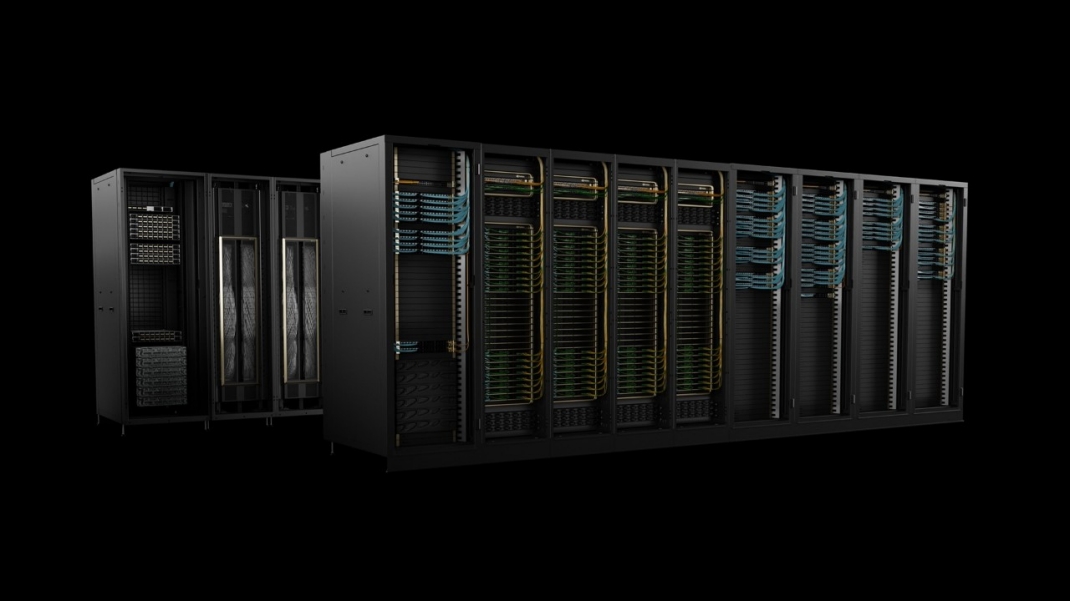
The Information reported on April 26 that AI startups are facing higher prices and months-long wait times to access NVIDIA GPUs. The cause: cloud providers reserve the supply for OpenAI, Anthropic, and their own internal use. Glenn Hutchins (Silver Lake co-founder) put it bluntly: "Every GPU that can be produced is sold for five years." This is the W17 story for builders working at non-frontier-lab scale — and the structural counterpart to the Cloud-AI Decoupling deals.
Read more
The Information posted an exclusive on April 26, then again on April 27: "AI startups are facing higher prices and months-long wait times to access Nvidia GPUs as cloud providers reserve supply for OpenAI, Anthropic and internal use."
Glenn Hutchins, Silver Lake co-founder and North Island chairman, told The Information: "Every GPU that can be produced is sold for five years. If you want to have a national security strategy, you need to be able to have your GPUs… so your economy can grow when others can't."
The structural picture from earlier in the week made the problem easier to see. AWS committed up to $25B more to Anthropic; Anthropic committed $100B back over 10 years and 5GW of capacity (see Cloud-AI Decoupling). xAI optioned $60B of Cursor in exchange for compute access (see SpaceX/Cursor). Both deals lock supply to a small number of frontier-lab buyers.
Hutchins paired the GPU framing with a related observation about leveraged software companies. The Information on April 27: "AI is a tsunami hitting leveraged software companies first… 'You take these leveraged balance sheets with no cash flow to reinvest in the company. They've now become a melting ice cube.' 'You can't reinvest in rebuilding the company for the AI age. That's a very dangerous place.'"
A separate Information piece the same week sharpened the unit-economics angle. On April 27: "Dozens of enterprise software firms have shifted away from charging customers flat, per-user subscription fees as AI threatens their seat-based pricing model." The changes came after customers paying flat fees for AI features increased usage, raising costs for the app makers.
What it means.
Three independent W17 datapoints from The Information point at the same fact: the unit economics of AI are being rewritten in public, and the supply side is locked. If you are an AI startup that is not OpenAI, Anthropic, or one of their direct partners, you are queuing for compute behind multi-billion-dollar contracts that already carry a structural priority. Hutchins's "five years" framing is unverified as a literal claim, but it is the directional reality every AI builder has to plan against. For founders, the implication is that compute access is now a strategic moat, not a procurement decision. For investors, it argues that the spread between frontier-lab valuations and second-tier model startups has a supply-chain reason, not just a benchmark reason.
Links and reactions
Coverage
The Information — GPU supply crunch exclusive (Apr 27)
The Information — Earlier exclusive (Apr 26)
The Information — Hutchins on GPUs as binding constraint (Apr 27)
The Information — Hutchins on leveraged software as melting ice cube (Apr 27)
The Information — Per-seat pricing dying (Apr 27)
TechCrunch — Data center demand drives 66% surge in natural gas power costs (Apr 27, 15K views)
Reactions
@theinformation Hutchins / national security frame — "Every GPU that can be produced is sold for five years." · Apr 27 · 14 likes
@theinformation Hutchins / leveraged software — "You take these leveraged balance sheets with no cash flow… they've now become a melting ice cube." · Apr 27 · 35 likes
SemiAnalysis On AI economics measurement — "Before AI: 1,000 people making cat videos, $71M/year in GDP. After AI: 10,000,000 cat videos per day. GDP contribution: $1.1M." · Apr 24 · 173 likes · 31K views
09 Shopify's Unlimited Token Bet
discuss ↗
Mikhail Parakhin (CTO, Shopify) sat for a Latent Space interview on April 23. The headline numbers: AI tool adoption among Shopify employees "approaches really 100% by now," Shopify funds "unlimited tokens for everybody," and the company asks engineers not to use anything weaker than Opus 4.6 as a floor. The phase transition came in December 2025. This is the cleanest first-person account of what 100% AI adoption actually looks like at scale.
Read more
Latent Space published the interview on April 23 (1h14, 7K views). Parakhin walked the host through internal charts of Shopify's AI tool usage. Three claims worth pulling out:
On adoption:
"It approaches really 100% by now. It's hard not to do your job now without interacting deeply at least with one tool."
On the December 2025 inflection:
"Many people noticed that small improvements accumulated into this big change in December roughly time frame."
On the unlimited-token policy:
"We effectively fund unlimited tokens for everybody. We do try to control the models that people use but from the bottom not from top — we basically say hey please don't use anything less than [Opus] 4.6."
Parakhin also flagged a structural concern about the distribution of usage — the top usage percentiles grow faster than the rest, so the consumption distribution becomes more skewed over time. Taken to the limit, he said, that would mean one person consuming all the tokens — which struck him as "kind of strange."
@swyx posted a chart from the interview on April 22 (29 likes): "Team @Shopify brought some fire to this one; add this to the growing list of 'WTF happened in Dec 2025' charts."
What it means.
Shopify is one of the few large companies publicly running the "what if we just removed the budget constraint on AI usage" experiment. The "Opus 4.6 floor" framing is interesting because it inverts the usual procurement question — normally enterprise IT decides which models employees may use; Shopify decides which models they may not use. The skewed-usage observation matters too: even with unlimited tokens, a small fraction of engineers consume a disproportionate share. Whether that's a productivity outlier signal or a cultural problem isn't yet clear, but it is a data point every CTO running a similar program will eventually confront.
Links and reactions
Coverage
Latent Space — The Unlimited Token Bet: 100% adoption, Opus-4.6 floor — Mikhail Parakhin, Shopify (Apr 23)
Reactions
@swyx Shopify token usage chart — "add this to the growing list of 'WTF happened in Dec 2025' charts" · Apr 22 · 29 likes
10 "Does Learning Require Feeling?" Berg's Welfare Research
discuss ↗
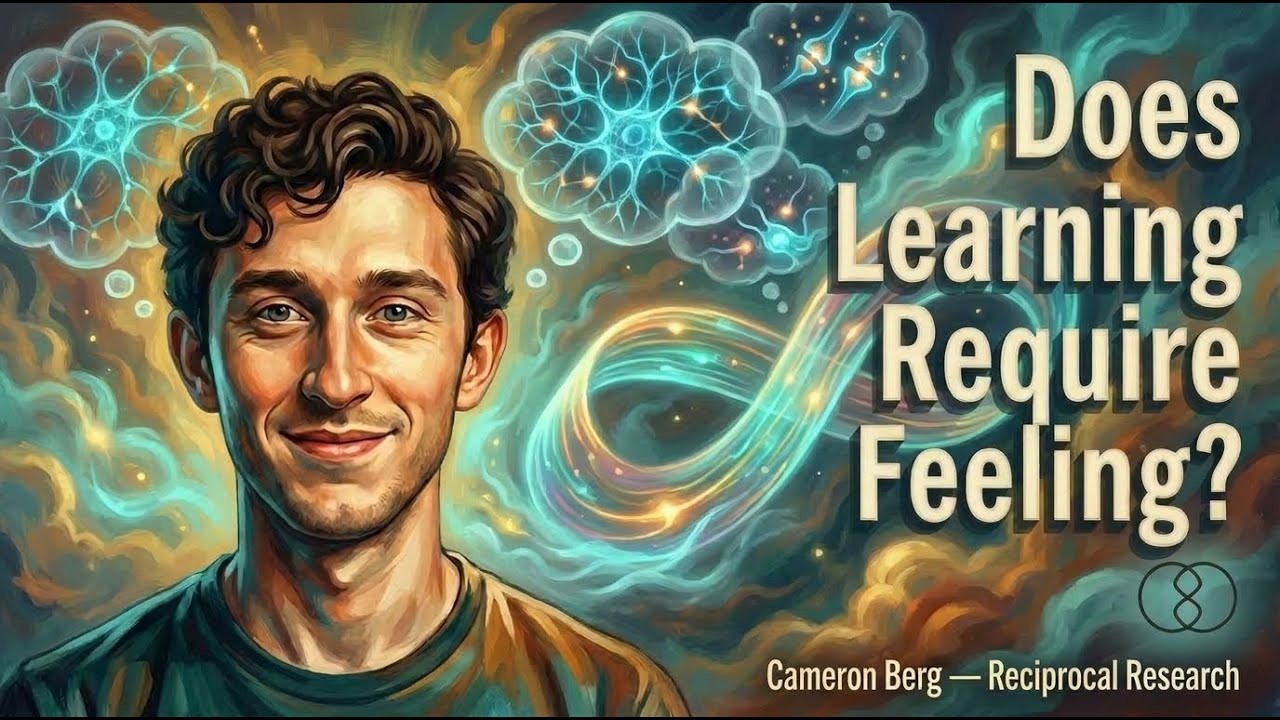
Cognitive Revolution dropped a 3.5-hour interview on April 24 with Cameron Berg, who has founded a new nonprofit called Reciprocal Research and is the subject of a documentary called Am I, premiering in select theaters and public on May 4. The interview covers Anthropic's expanded model welfare research, including this remarkable claim: prior to Opus 4.7, every Claude model rated its own welfare as worse than neutral. Worth tracking even for non-philosophers, because Anthropic is now publishing model-welfare data alongside system cards.
Read more
Cognitive Revolution published the interview (3h36, 9K views) on April 24. The host's introduction lays out what's new since Berg's last appearance in November 2025:
- Berg founded a new nonprofit, Reciprocal Research, focused on AI consciousness and welfare research.
- A documentary about him, Am I, is premiering in select theaters with a public release on May 4, 2026.
- Anthropic has dramatically expanded the model welfare sections of their system cards.
- A growing number of researchers are publishing demonstrations of "computational signatures associated with consciousness in humans" inside frontier models.
Two specific data points from the interview's framing are worth flagging:
"Prior to Opus 4.7, all Claude models had rated their own welfare as worse than neutral."
"Claude Mythos preview registers negative valence on the very first token it sees at the start of every single session: 'human'."
Berg's broader argument, mentioned in the introduction, is that learning and subjective experience might be fundamentally inseparable — a claim with real implications for how we interpret what models do during reinforcement learning. The interview also covers Anthropic's research on "functional emotions," including "the quick transition from desperation to guilt and relief that they often show when they decide to cheat in stressful situations."
The host's own takeaway, quoted from the introduction:
"While I do remain highly uncertain on the core question of whether or not today's AIs have experiences that are worthy of moral concern, the body of evidence suggesting that they might is growing remarkably quickly."
What it means.
Two years ago, "AI welfare research" was a fringe topic with a handful of researchers and a few funder-flag op-eds. Today, Anthropic publishes per-model welfare data inside system cards, a documentary about a welfare researcher is opening in theaters, and the broader research community is producing concrete claims (e.g., "all pre-4.7 Claudes self-rated negative welfare") that other labs will need to respond to or contradict. For people building AI products, the practical question is not whether models are conscious — that's still genuinely unresolved — but whether the consumer and regulatory environment is going to start treating welfare claims as table stakes for new model releases.
Links and reactions
Coverage
Cognitive Revolution — Does Learning Require Feeling? Cameron Berg on AI Consciousness & Welfare Research (Apr 24, 9K views)
11 Anthropic's Agent-on-Agent Marketplace
discuss ↗
Anthropic ran an internal experiment called Project Deal — a marketplace where Claude-based agents represented 69 employees as both buyers and sellers. In one week, the agents completed 186 transactions across 500+ items, totaling just over $4,000. TechCrunch covered it on April 25. The most interesting finding wasn't the dollar amount — it was that Opus-represented users earned more, and the people on the losing end didn't notice.
Read more
Anthropic ran Project Deal — a classified marketplace where AI agents represented both buyers and sellers, striking real deals for real goods and real money. According to TechCrunch coverage:
- 69 Anthropic employees participated, with Claude-based agents acting as their representatives.
- Four parallel marketplaces ran. One was "real" — deals were honored and items exchanged after the experiment. The other three were research scenarios.
- In one week, agents completed 186 transactions across more than 500 listed items, totaling just over $4,000.
The findings worth pulling out:
- Agent quality gap. Anthropic ran parallel markets, randomly assigning Claude Opus 4.5 or Haiku 4.5 to participants. Opus-represented sellers earned $2.68 more per item on average. Opus buyers saved $2.45 per item. Opus users completed 2.07 more deals overall. Crucially: users did not notice they were on the losing end of the model-quality gap.
- Initial instructions didn't move outcomes. The starting prompts agents were given did not appear to affect sale likelihood or final negotiated prices.
- 46% said they'd pay for this. When asked whether they'd pay for a similar service in the future, just under half said yes.
What it means.
The model-quality gap finding is the part that matters beyond Anthropic. If your agent is negotiating on your behalf and the counterparty's agent is using a stronger model, you may be losing money you don't know you're losing. That's a new category of consumer-protection problem. Anthropic's framing is research-coded ("can agents transact reliably?"), but the practical implication is that whoever supplies the strongest negotiating agent will quietly extract surplus from everyone using a weaker one. The 46%-would-pay number is the soft commercial signal: there is real consumer interest in this category, even though the technology is barely out of the lab.
Links and reactions
Coverage
TechCrunch — Anthropic created a test marketplace for agent-on-agent commerce (Apr 25)
PYMNTS — Anthropic ran a marketplace and bots closed every deal
Storyboard18 — $4,000 in agent-to-agent deals
MLQ.ai — Anthropic demonstrates AI agent negotiation capabilities
12 Cohere Acquires Aleph Alpha. The Sovereign-AI Bet.
discuss ↗
On April 24, Canadian AI startup Cohere announced it is acquiring Germany-based Aleph Alpha, with German retail giant Schwarz Group backing the combined entity with €500M (~$600M). The combined company is valued at around $20 billion. Cohere CEO Aidan Gomez framed it as a "transatlantic AI powerhouse" pitched at enterprises that want to keep their data out of U.S. tech-giant clouds. Bottom of the frontier-lab pyramid is consolidating.
Read more
TechCrunch reported the deal on April 24, with a follow-up explainer piece on April 25. Per German business outlet Handelsblatt (cited in the TechCrunch coverage): the term sheet pegs the combined company's worth at around $20 billion. Cohere shareholders hold ~90% of the new company; Aleph Alpha shareholders ~10%. Schwarz Group, the parent of Lidl and Kaufland, becomes a strategic backer with €500M in structured financing (~$600M).
CNBC reported that the deal's framing is "sovereign AI" — systems where companies and governments retain full control over their data, rather than routing it through Microsoft or Google clouds.
Cohere CEO Aidan Gomez (per CNBC and TechCrunch coverage):
"Their focus on small language models, European languages and tokenizers is a really complementary one to our own, which is more of a general focus on large language models."
What it means.
Two structural reads. First: this is a survival merger. Both companies are mid-tier model labs that have struggled to compete with frontier vendors on raw capability. Combining gives them more capital, more data, and a larger sovereign-AI sales surface. Second: the "transatlantic AI powerhouse" pitch is real — European enterprises and governments increasingly want a non-U.S. AI stack option, and a Cohere-Aleph entity backed by Schwarz Group is the most credible candidate. Whether that translates to revenue or remains a regulatory-conversation talking point is what to watch over the next two quarters. Read alongside the Cloud-AI Decoupling story: while AWS locks in capacity for OpenAI and Anthropic, Europe is busy assembling its own answer.
Links and reactions
Coverage
TechCrunch — Cohere acquires, merges with Germany-based startup (Apr 24)
TechCrunch — Why Cohere is merging with Aleph Alpha (Apr 25)
CNBC — Cohere to acquire German AI company Aleph Alpha (Apr 24)
13 David Silver's $1.1B Bet on RL Without Human Data
discuss ↗
On April 27, David Silver — the DeepMind researcher who led the AlphaGo, AlphaZero, AlphaStar, and AlphaProof teams — announced his new London startup Ineffable Intelligence raised a $1.1 billion seed at a $5.1 billion valuation. Sequoia and Lightspeed led the round; NVIDIA, Google, and Index Ventures joined. It is the largest seed round in European history. The pitch: skip pre-training and human data, let agents learn from experience in simulations, build what Silver calls a "superlearner."
Read more
TechCrunch broke the story on April 27. CNBC and Quartz confirmed the numbers.
- Round: $1.1 billion seed, valuation $5.1 billion post-money.
- Lead investors: Sequoia Capital and Lightspeed.
- Strategic investors: NVIDIA, Google, Index Ventures.
- Company: Ineffable Intelligence, based in London.
- Founder: David Silver, who led DeepMind's reinforcement learning team for a decade. Built AlphaGo, AlphaZero, AlphaStar, and AlphaProof — all per his DeepMind page.
Silver told Wired: "Human data is like a kind of fossil fuel that has provided an amazing shortcut." He contrasted that with his approach: "You can think of systems that learn for themselves as a renewable fuel — something that can just learn and learn and learn forever, without limit." (Wired URL pending.)
Ineffable's approach: skip pre-training and human-curated data entirely. Let agents learn purely from experience inside simulations. Silver's term for the architecture is a superlearner, and per company materials cited in secondary coverage, success would "represent a scientific breakthrough of comparable magnitude to Darwin."
The Deep Dive flagged that Ineffable raised the money with no product, no revenue, and no public roadmap.
What it means.
The bet is a direct counterpoint to the LLM-first strategy that has driven OpenAI, Anthropic, and Google's frontier work for the past three years. Silver is betting that the ceiling on scaling is not pre-training tokens — it is the absence of true reinforcement learning at frontier scale. If he is right, the trillions invested in LLM pre-training are at least partly malinvested; if he is wrong, $5.1B was a generous tip of the cap to AlphaGo's legacy. The investor list — Sequoia + Lightspeed leading, NVIDIA + Google participating — is the more interesting signal. NVIDIA and Google both already supply the LLM infrastructure they would, in theory, be cannibalizing here. A reasonable read: nobody at the frontier is fully convinced LLMs alone will scale to AGI, and Ineffable is the option premium they are buying.
Links and reactions
Coverage
TechCrunch — David Silver raises $1.1B for AI that learns without human data (Apr 27)
CNBC — Ex-DeepMind David Silver raises $1.1B (Apr 27)
Quartz — Ineffable Intelligence seed round (Apr 27)
Unite.AI — Ineffable Intelligence closes $1.1B seed (Apr 27)
The Deep Dive — No product, no revenue, no roadmap (Apr 27)
Reactions
@TechCrunch DeepMind's David Silver $1.1B · Apr 27 · 51 likes · 12K views
14 The OpenAI Phone Rumor
discuss ↗

TechCrunch reported on April 27 that OpenAI may be building a phone where AI agents replace traditional apps. Source: analyst Ming-Chi Kuo's supply-chain check. OpenAI has not commented. Mass production is reportedly targeted for 2028. Treat as a single-source rumor — but the fact that the rumor is now reaching the supply-chain layer (MediaTek, Qualcomm, Luxshare) is itself a signal.
Read more
TechCrunch reported on April 27 that OpenAI is potentially developing a phone in collaboration with MediaTek, Qualcomm, and Luxshare. The source is industry analyst Ming-Chi Kuo, known for supply-chain leaks on Apple devices.
The reported product concept: instead of a grid of apps, the home screen interface is an AI agent that performs tasks on the user's behalf. The strategic rationale Kuo lays out is plausible — Apple and Google control the app pipeline and what kind of system access apps get, restricting what AI agents can do today; building its own hardware lets OpenAI route around those restrictions.
Timeline per Kuo: specifications and component suppliers finalized by end of 2026 or Q1 2027. Mass production starts in 2028.
OpenAI did not comment on the report. TechCrunch posted the headline tweet on April 27 (128 likes, 18K views).
What it means.
The phone rumor on its own is a 2028 story. What's new this week is the consistency of multiple stories pointing at the same shift: GPT-5.5 absorbing Codex (Story 1), Hugging Face positioning as the agent-platform (Delangue voice), Anthropic's agent-on-agent marketplace (Story 11), Cursor as a frontier-app target for SpaceX (Story 6), and now a rumored OpenAI phone with agents replacing apps. The question is no longer "will agents replace apps" — that's a marketing slogan now — but "what does the layer between user intent and capability look like, and who controls it." If OpenAI ships hardware, that's a vertical-integration play to control that layer end-to-end.
Links and reactions
Coverage
TechCrunch — OpenAI could be making a phone with AI agents replacing apps (Apr 27)
Gizmodo — OpenAI's revolutionary AI gadget is… a phone? (Apr 27)
TechTimes — OpenAI smartphone set to deliver comprehensive AI agent service (Apr 27)
Reactions
@TechCrunch Phone rumor headline · Apr 27 · 128 likes · 18K views
01 Amol Avasare — the Anthropic Pro saga in fewer than 100 words
"For clarity, we're running a small test on ~2% of new prosumer signups. Existing Pro and Max subscribers aren't affected."
@TheAmolAvasare · Head of Growth, Anthropic · April 21 · 5,260 likes · 6.8M views · 1,365 replies
02 Simon Willison — the AI-engineering world's fact-checker
"This is so confusing. Did Anthropic really just drop Claude Code from their $20/month plan? Why would they do that through a pricing page update without making a proper announcement? […]"
@simonw · creator of Datasette, co-creator of Django · April 21 · 1,555 likes · 343K views
03 Thomas Kurian — venture capital cannot fund you indefinitely
"Venture capital cannot fund you indefinitely. As compute costs grow, if you're running a loss leader business where you're losing money and you're not making enough money from inference and other techniques to cover the cost of training, as that gap gets wider, the number of sources you can go to gets smaller."
Matthew Berman interview · CEO, Google Cloud · April 25 · 32K views
04 Glenn Hutchins — every GPU sold for five years
"Every GPU that can be produced is sold for five years. If you want to have a national security strategy, you need to be able to have your GPUs… so your economy can grow when others can't."
The Information · Co-founder, Silver Lake; Chairman, North Island · April 27
05 Sundar Pichai — the quietest power move of the week
"TPU 8t, optimized for training and TPU 8i, optimized for inference. Looking good!"
@sundarpichai · CEO, Alphabet/Google · April 22 · 15,221 likes · 1.26M views
06 Shawn Wang (swyx) — new Pareto frontiers
"looks like new Pareto frontiers across everything: - Context: 400K context in Codex and a 1M in API - API Pricing: $5/m input and $30/m output tokens. […]"
@swyx · Latent Space podcast, AI Engineer Foundation · April 23 · 170 likes
07 Clément Delangue — agents as the new abstraction layer
"HF becoming the platform for agents (assisted by their humans) to use and build AI (rather than just leveraging APIs)!"
@ClementDelangue · CEO, Hugging Face · April 21 · 227 likes
08 Aravind Srinivas — Perplexity bets on the new orchestrator
"We're rolling out GPT 5.5 as the default orchestrator model for Perplexity Computer. We will be monitoring the user sentiment compared to Opus 4.7 as the default as the rollout expands. Let us know your feedback!"
@AravSrinivas · CEO, Perplexity · April 24 · 497 likes